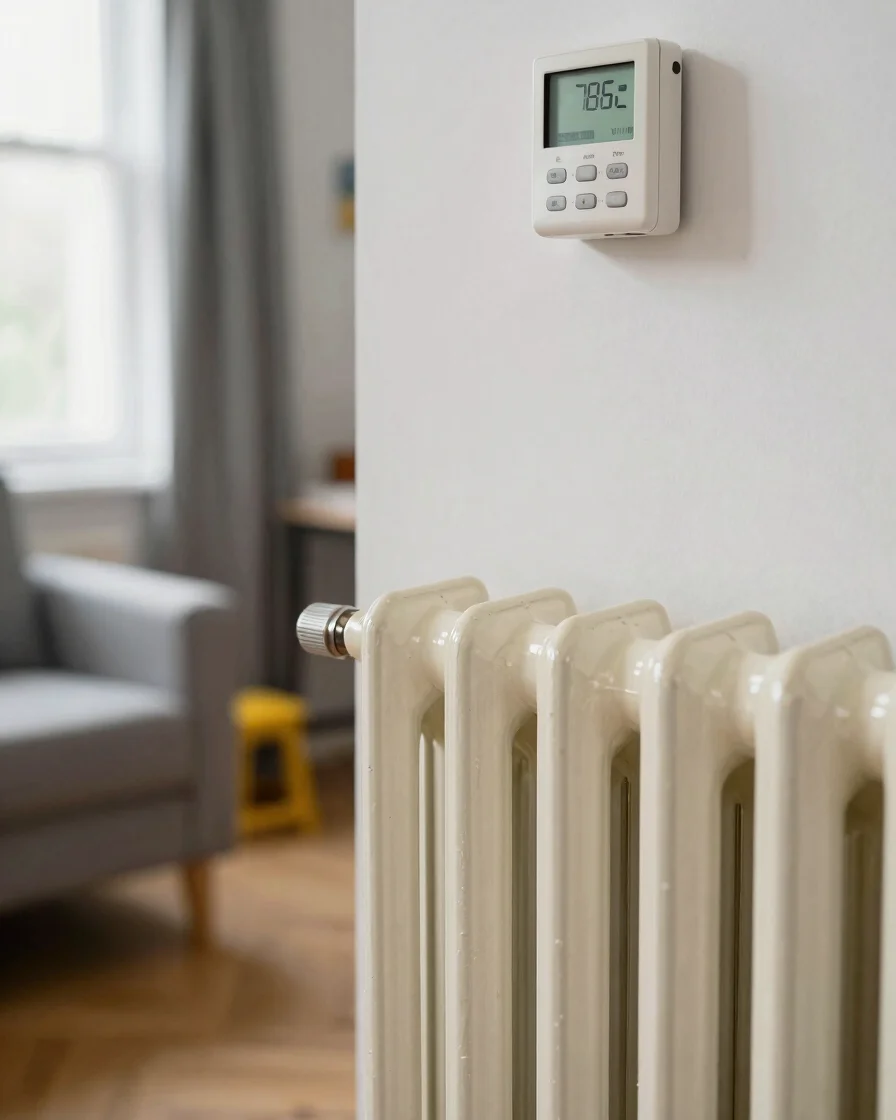
Heating and comfort
Keep your home warm, safely, all winter
Radiators, thermostats and domestic boilers work best when they are checked before the cold arrives. This guide explains simple routine care, the pressure readings to watch, and the points where a certified engineer must take over.
Routine checks
Three checks before the cold season
Follow the instructions supplied with your equipment. These routine steps help prevent premature wear and uneven heat.
Radiators
Bleeding radiators
Trapped air can leave the top of a radiator cool. Bleed it with the key supplied for the valve, catching water in a cloth, and stop once water flows steadily.
Pressure
Watching hydronic pressure
Check the boiler pressure gauge against the manufacturer's recommended range. If the reading falls repeatedly, note it and contact a qualified heating engineer.
Controls
Thermostat and zone settings
Calibrate room thermostats and programmable timers so each zone heats only when needed. Balanced settings reduce cycling and premature wear.
Know the limits
Where simple care ends
Bleeding a radiator and reading a gauge are reasonable tasks for an occupant. Gas appliances, flue connections, and internal boiler components are different: in France, gas boilers require regular inspection by a qualified professional, so always follow the local regulations and the manufacturer's service schedule.
If you smell gas, see soot, hear unusual noises from the boiler, or notice persistent leaks, switch off the appliance where it is safe to do so and call a certified engineer. Keep a record of each service visit for your records.