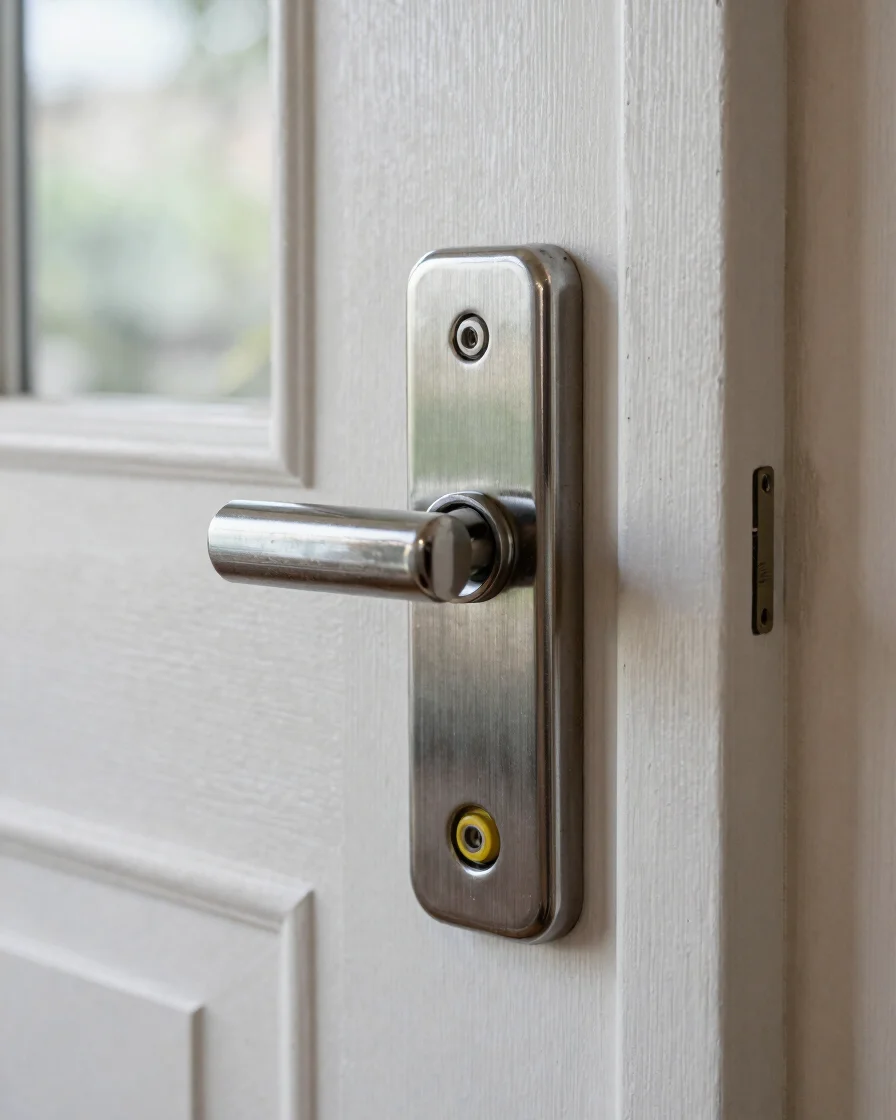
Locks and entry points
Lock mechanics and entrance protection
A door is only as secure as its lock, strike plate, frame, and the habits that keep them working. This guide explains how the main parts fit together so you can judge your own entrance with calm, practical criteria.
Hardware
Grades, cylinders, and common weak points
Official standards and manufacturer documentation are the reference points for ratings. Compare what each component claims to resist before deciding what to check or replace.
Security grade
Reading lock ratings
Standardized grades indicate tested resistance to picking, drilling, and forced entry. Check the grade printed on the product and the manufacturer's test references rather than relying on general claims.
Cylinder
Cylinder defenses
Anti-drill pins, anti-pick profiles, and anti-snap designs address specific attack methods. A well-chosen cylinder matters most on exterior doors and should match the door's overall construction.
Structure
Frame and strike weak points
Short screws in the strike plate and a thin door frame are frequent vulnerabilities. Reinforcing these structural elements often adds more protection than changing the lock alone.
Prevention
Daily habits that protect a lock
Clean the keyway occasionally and use a dry graphite lubricant rather than oil, which collects dust. Close the door fully and check that the bolt engages without forcing the key. Keep spare keys in a known place and avoid leaving them visible near the entrance.
Stop and call a certified locksmith if a key turns with resistance, the cylinder feels loose, or the lock jams. Forcing a mechanism can damage it and weaken the door. Professional intervention is also advisable when replacing a cylinder or reinforcing a door, to make sure the work matches the manufacturer's specifications.