
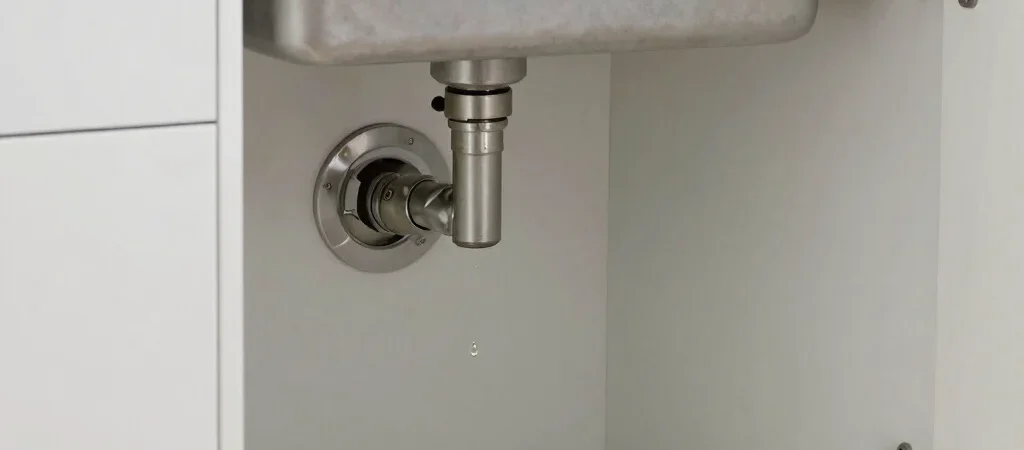
You notice a bead of water beneath the kitchen sink, then another. Before reaching for a wrench, identify where the water is coming from and whether it is safe to approach. A few careful observations can help limit damage without turning a small leak into a risky repair.
Start With Safety
If water is near an outlet, appliance, or electrical panel, do not step into it or handle wet electrical equipment. Keep people away and contact an appropriate professional; if there is immediate danger, use local emergency guidance. For a gas smell or another urgent hazard, leave the area and contact the relevant emergency service from a safe location.
If the area is dry and accessible, look for the source without dismantling fittings. Note whether the water appears at a supply connection, around the tap, or beneath the sink after water drains. A photo and a short note about when the leak appears can help a plumber or landlord assess it.
Limit Damage Carefully
If you can reach the local shutoff valve safely and know how it works, closing it may reduce the flow; do not force a stiff or unfamiliar valve. Use a container or towels only when there is no electrical risk, and move stored items away from the wet area. In a rental, notify the landlord or property manager promptly and follow any emergency instructions in your lease.
Avoid tightening a fitting just because it looks loose. A damaged connection, corroded pipe, or leak hidden behind a cabinet can worsen when disturbed, and the visible drip may not be the actual source.
Know When to Call
Call a qualified plumber when the leak continues after a safe shutoff, comes from a concealed pipe, or is accompanied by swelling, staining, or a persistent musty smell. For shared buildings, report water that may affect another unit or a common area as soon as possible. Keep the manufacturer’s instructions for any fixture in mind, and leave repairs beyond simple observation to someone qualified.